Humanitarian Action
Delivering protection and life-saving assistance to displaced and vulnerable populations across the world’s most complex emergencies.
Read moreA memoir of international service
Humanitarian Action, Global Diplomacy, and the Challenges of Reform
An insider’s reflection on more than three decades of humanitarian service, diplomacy and international cooperation.
About the Book
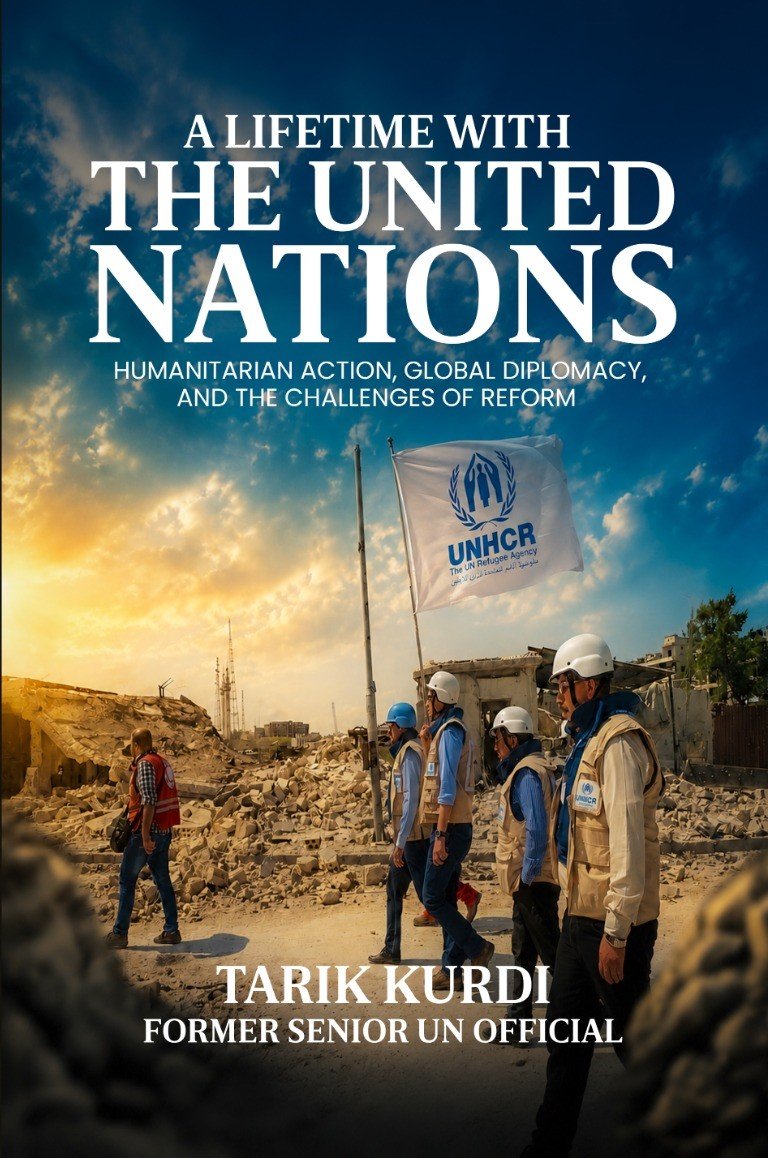
A Lifetime with the United Nations is a personal and professional reflection on more than three decades of service within the United Nations system. Drawing on first-hand experience gained across more than fifteen countries and some of the world’s most complex humanitarian emergencies, the book combines memoir, institutional history, policy analysis and reflections on global governance.
It offers readers a rare insider’s perspective on how the United Nations functions in practice — highlighting both its remarkable achievements and its structural limitations. It examines the Organization’s role in maintaining international peace and security, advancing human rights, supporting humanitarian action, promoting development, and fostering international cooperation.
Rather than a purely academic study or a traditional autobiography, the manuscript bridges the gap between personal experience and institutional analysis. It moves between the deep field — often in conflict, crisis and fragile settings — and the headquarters and conference rooms of Geneva, tracing the evolution of the United Nations, its principal organs, its humanitarian and development work, human rights and international law, and the urgent reforms needed to strengthen its effectiveness.
While the book acknowledges the many challenges facing the United Nations, it remains grounded in the conviction that the Organization continues to represent humanity’s most comprehensive framework for collective action and peaceful international engagement.
The Principal Themes
Delivering protection and life-saving assistance to displaced and vulnerable populations across the world’s most complex emergencies.
Read moreHow Member States pursue negotiation, multilateral cooperation and consensus within the United Nations framework.
Read moreThe collective security model, the Security Council, and the persistent question of decisive action in a divided world.
Read moreFrom the Universal Declaration to the Human Rights Council — the instruments and mechanisms that defend human dignity.
Read moreInternational humanitarian law, the courts and tribunals, and the legal architecture underpinning the international order.
Read moreWhy continuous adaptation — of the Security Council, financing and coordination — is essential to the Organization’s future.
Read moreA Career in International Service
35+ years
of service within the United Nations system
15+
countries of assignment across several world regions
UNHCR
the UN Refugee Agency — protection and durable solutions
Geneva
headquarters service across Departments and Regional Bureaux
Human Rights Council
Chair of the 10th Forum on Minority Issues
Deep field
humanitarian operations in conflict and crisis settings
Inside the Book
The manuscript is organised into thematic chapters that move from the origins of modern multilateralism to the reforms that will shape the Organization’s future.
The first experiment in collective security, its ambitions, its structural weaknesses, and the lessons it bequeathed.
The historical moment of 1945, the Charter, membership, purposes and the principal organs of the Organization.
The Organization’s most representative body — its roles, resolutions and system of voting.
Composition, the veto power, the Responsibility to Protect, enforcement measures and the case for comprehensive reform.
The principal judicial organ, questions of compliance and enforcement, and the ad-hoc tribunals of the modern era.
Coordination of the Organization’s economic, social and development work across the system.
The international civil service, its departments and offices, and the office of the Secretary-General since 1945.
Inter-agency coordination mechanisms and the International Civil Service Commission that bind the system together.
From the field
“For millions of civilians trapped by armed conflict, natural disasters, or forced displacement, the presence of the United Nations has frequently represented the difference between survival and catastrophe.”
A Lifetime with the United Nations · Chapter Six
Availability
The book will be available in the editions below. Purchase links will be added here as soon as they become available.
Digital edition for e-readers, tablets and mobile devices.
Coming Soon
The printed edition for everyday reading and study.
Coming Soon
A premium printed edition for the library and the shelf.
Coming Soon
In the Author’s Words
I observed the Organization not only from headquarters and conference rooms, but more particularly from the deep field — often in environments marked by conflict, humanitarian crises, and fragile political and security situations.
The present situation of the United Nations calls for uneasy comparison with the final years of the League of Nations — a widening gap between its ambitions on the one hand, and its enforcement capabilities on the other.
The collapse of the League was not sudden, but rather the cumulative result of an institution whose legal framework and political realities were fundamentally mismatched.